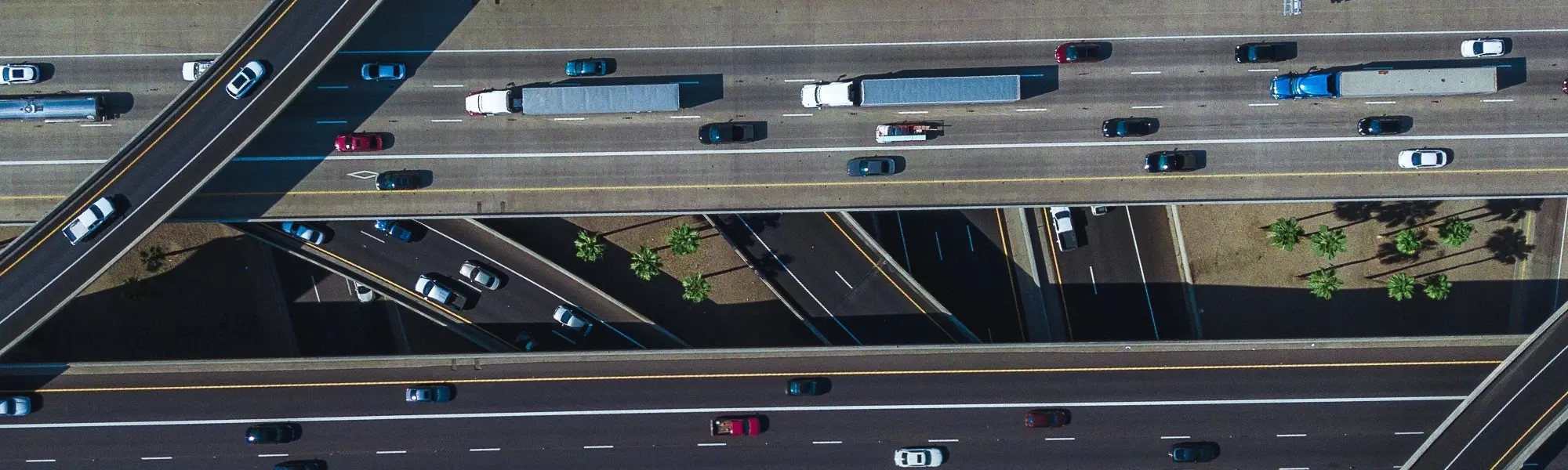
Telematics provides real-time visibility into an entire fleet operation. With that visibility and data, fleet managers can reduce costs, improve safety, and operate more efficiently.
Key takeaways
- Fleet telematics uses vehicle tracking technology, sensors, and wireless communications to transmit real-time data on fleet performance
- Tracking vehicle performance in this way requires installing a telematics device inside the vehicle to collect fleet data. This is then transmitted via cellular networks, processed via a cloud platform, and analysed via an online dashboard to inform data-driven decision making
- Multiple industries use telematics to track vehicle speed, fuel costs and consumption, vehicle position, driver behaviour, vehicle maintenance schedules, and more
- The benefits of fleet telematics include improved fleet safety and vehicle compliance, and reduced fuel and maintenance costs
What is fleet telematics?
Fleet telematics is a system that uses tracking technology, onboard sensors, and wireless communications to collect, transmit, and analyse data from your vehicles.
A comprehensive telematics system captures several different types of vehicle data:
- Fuel usage and spend
- Vehicle speed
- Position
- Idling time
- Driver behaviour (drowsiness, seat belt usage, etc.)
- Vehicle diagnostics and faults
- Engine data
- Vehicle tracking
All this data flows into a single dashboard, transforming fragmented information into actionable insights you can act on immediately.
The history of telematics
The word “telematics” is a blend of two terms: “telecommunication” and “informatics.” Telecommunication is the exchange of information using technology. Informatics refers to the use of computers to gather and analyse data, and manage real-world systems. Together, they describe a system for collecting and transmitting vehicle data.
Telematics was developed from three unique breakthroughs of modern technology: the internet, GPS, and machine-to-machine communication (M2M).
The concept of telematics first appeared in the 1960s when the U.S. Department of Defence developed the Global Positioning System (GPS) to track the movements of U.S. assets and improve military communication. This marked the beginning of modern vehicle tracking.
Through the 1980s and 1990s, the commercial market began to recognise telematics’ potential. This decade saw the development of more sophisticated vehicle navigation systems and real-time data transmission.
The rise of the internet and wireless communication in the 2000s further propelled the field, making telematics more accessible and practical for various industries, including construction and fleet management. The continued evolution of cloud computing has transformed telematics from simple tracking and navigation into comprehensive asset management solutions that are available today.
What is a telematics device?
Hardware telematics devices vary depending on what data you need to capture and your specific operational priorities. Some fleets need comprehensive tracking and driver monitoring. Others need more specific capabilities to meet the needs of their operations.
Here are the main types:
- GPS trackers
- Dash cameras
- Asset trackers
- OEM telematics
Most telematics devices use cellular networks (4G/5G or satellite) to transmit data wirelessly. They’re designed to work continuously without manual intervention, automatically capturing and sending data to your platform in real time.
How does fleet telematics work?
Telematics can seem complex and technical at first. However, it can easily be broken down:
Step 1: Data collection
A telematics device is installed in a vehicle. This hardware contains GPS receivers, sensors, and cellular connectivity. As a vehicle operates, the device continuously captures data about location, movement, speed, acceleration, braking, fuel consumption, and engine performance.
The device connects to a vehicle’s engine through either the CAN bus (a communication protocol for real-time data collection) or the OBD II port. This connection allows the telematics system to access detailed information from your vehicle’s onboard diagnostics.
Step 2: Data transmission
The telematics device uses cellular networks to wirelessly transmit data to a centralised cloud platform. This happens automatically and continuously throughout the day.
A telecoms company then manages the flow of information between a vehicle and the telematics provider’s servers, ensuring reliable data transmission.
Step 3: Data processing
A telematics provider receives the raw data and processes it in their cloud platform. The system standardises the information, calculates metrics such as driver behaviour scores and fuel consumption rates, and identifies key conditional alerts, such as maintenance or compliance issues.
Step 4: Access and analysis
Once processed, all this information becomes accessible through an online dashboard. Fleet managers and operators can view real-time vehicle locations, driver behaviour data, maintenance alerts, fuel consumption trends, and performance reports, which can then be used to analyse trends over time.
What are the benefits of fleet telematics?
Fleet telematics delivers significant benefits by giving fleet managers complete visibility of scattered vehicles and a diverse team of drivers:
1. Reduce fuel costs
Telematic data shows exactly how driving behaviour affects fuel consumption. Excessive idling, speeding, harsh acceleration, or harsh braking all impact fuel. By identifying these patterns and coaching drivers to change behaviour, fleets typically see a reduction in fuel costs.
Key fuel-saving insights telematics provides include:
- Idling time and location tracking
- Speeding incidents and frequency
- Harsh acceleration patterns
- Route efficiency analysis
- Driver-by-driver fuel consumption comparison
2. Improve safety
Instant alerts about speeding, harsh braking, and tailgating allow drivers to adjust their behaviour straightaway. Coaching conversations or programmes based on objective data help drivers improve their driving habits and become safer drivers. Incident detection and footage capture support faster insurance claims.
3. Ensure compliance
Automated monitoring of compliance requirements reduces the need for manual checking and helps improve documentation gaps. Telematics automatically generates compliance reports. Managers receive alerts before violations occur, giving you time to correct issues.
Compliance tracking typically includes:
- Automatic driver hours tracking
- Rest period monitoring
- Tachograph data integration
- License verification
- Regulatory alert notifications
4. Reduce maintenance costs
Telematics alerts you to maintenance issues before they become breakdowns. Predictive maintenance based on engine diagnostics helps you schedule service on your schedule, not on the roadside. This reduces emergency repairs and extends vehicle lifespan.
5. Improve customer service
Real-time tracking lets you provide accurate delivery ETAs. Customer service improvements may include:
- Accurate delivery time estimates
- Real-time tracking updates
- Proof of delivery documentation
- Faster incident resolution
- Improved transparency
- Enhanced reliability reputation
Industries that use fleet telematics
Fleet telematics is used across a wide range of sectors, with any organisation that relies on vehicles or mobile assets standing to benefit from greater visibility and control over their operations.
- Construction: Construction fleets operate across multiple job sites with heavy machinery, specialist equipment, and tight project deadlines. Telematics helps managers track vehicle locations and monitor equipment usage, reducing downtime and keeping projects on schedule.
- Logistics and distribution: For fleets moving goods, telematics provides real-time visibility into vehicle location, driver performance, and regulatory compliance monitoring. This helps operators improve route efficiency, provide accurate ETAs, and reduce fuel spend across large fleets.
- Utilities: Utility fleets are often dispatched reactively to faults or emergencies. Telematics helps dispatchers identify the nearest available vehicle, monitor response times, and ensure that engineers meet compliance requirements while out in the field.
- Leasing and vehicle rental: For businesses managing fleets that they don’t directly operate, telematics provides visibility into how vehicles are being used, flags potential maintenance issues early, and supports accurate mileage and usage reporting.
- Insurance: Telematics-based insurance programmes use driving behaviour data to assess risk more accurately, reward safer drivers with lower premiums, and provide evidence in the event of an incident or claim.
What does the future of fleet telematics hold?
Fleet telematics has already transformed how operators manage their vehicles and drivers, but the technology continues to evolve.
AI is set to shift fleet telematics from dashboards and alerts toward genuinely proactive fleet management. Rather than simply highlighting data, AI-powered systems will increasingly take on tasks such as more accurately predicting when vehicle breakdowns might occur, recommending repair actions, and optimising routes based on weather or traffic.
Sustainability is also becoming a central driver of telematics development. As pressure grows on businesses to reduce emissions and meet ESG targets, telematics is increasingly being used to monitor fuel consumption, idling, and vehicle performance at a granular level, giving fleet managers the data they need to drive down emissions and support longer-term sustainability commitments.
Mark Packman, Chief Product Officer at Matrix iQ commented: “Telematics has always been about giving fleet managers better information, but what’s coming next is about giving them better outcomes. AI will do more of the heavy lifting when it comes to predicting issues and optimising operations, and sustainability will move from a reporting exercise to something fleets can actively manage in real time. It’s an exciting time for the industry.”
Discover the best telematics software for your business at Matrix iQ
Matrix iQ has been a trusted partner for over 25 years, supporting logistics, construction, utilities, vehicle rental companies, and more.
We’ve built our reputation by understanding that “one-size-fits-all” telematics doesn’t work. That’s why we’ve developed a comprehensive suite of fleet management solutions that work together seamlessly.
Speak to one of our telematics experts today to help find the right solution for your operation.